
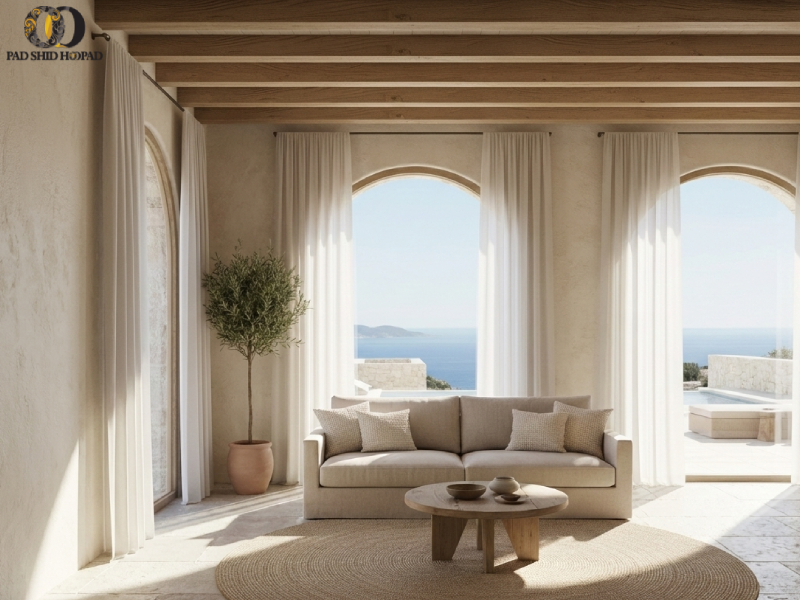
Until recently, interior design was a purely aesthetic field, but it has now evolved into a strategic science that influences the experience of spaces, their occupation, and memory. The modern Mediterranean interior design is one of the most current styles, characterized by its ability to reconcile emotional warmth with architectural clarity. It is especially appropriate for luxury villas and modern apartments in the city.
Padshid hoopad, Mediterranean-inspired interior is not an aspect that is handled as a decorative trend, but as a sophisticated interior design framework. One that looks to nature, light, and proportion to produce spaces that look timeless and not transient.
Interior Design Foundations of Modern Mediterranean Style
The modern Mediterranean interior design is based on the Mediterranean interior style, but through the refracted principles of modern interior design. The outcome is a spatial language that is characterized by simplicity, material honesty and understated grace.
This is a strategy that enables texture, flaws, and craftsmanship to co-exist with a clean line in contrast to the minimalist interiors, which are purely minimal. The architectural details, such as arches, niches, or thick walls, are applied selectively and are never overused. The emphasis is placed on circular movement, rather than decoration.
It is this architectural logic that renders the style flexible with its size, whether it is large villas or small apartments.
Designing Villas with Mediterranean Elegance
Luxury villas are the perfect set-up where the modern Mediterranean interior design can assert itself. Large volumes, high-ceiling and close relations to external areas enable the interior to breathe.
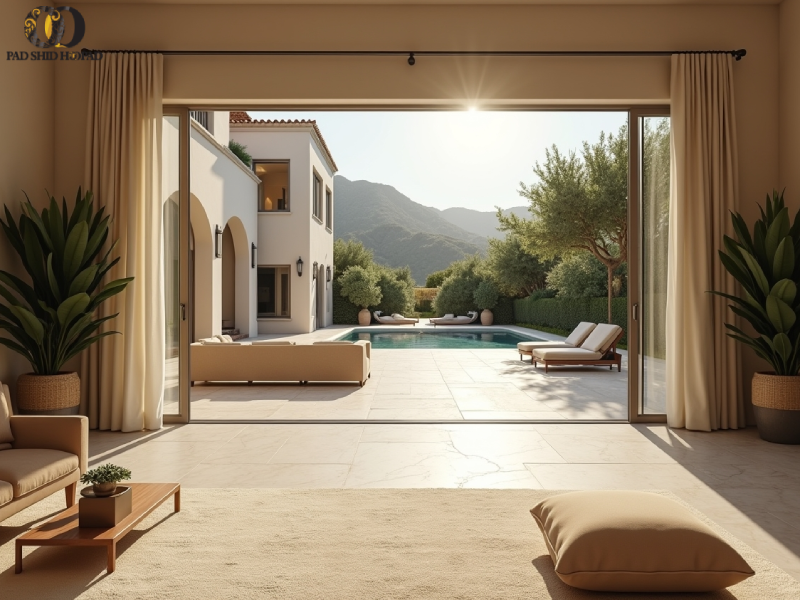
The important implementation plans are:
- The development of the smooth transition between the outside and inside spaces.
- Continuous flooring materials like stone or microcement should be used.
- Leaving walls and ceilings to be aesthetically calm, emphasizing shape, but not detail.
In this case, interior design tend to intersect with the landscape design, in which the courtyards, terraces and interiors have been designed to create a single space as opposed to different spaces.
FAQ – Does modern Mediterranean interior design need a seaside location?
No. Although driven by the Mediterranean regions, this interior design methodology is based on proportion, light and material but not the geography. It is as effective in the inland or urban environment when used properly.
Mediterranean Interior Design for Urban Living
City apartments require accuracy. There could be not enough space, limited light, and each design action should have a goal. In this respect, the modern Mediterranean interior design is defied to the bare essentials.
Adaptations in practice involve:
- Wall finishes- light and textured to increase brightness.
- In-built storage to ensure continuity of appearance.
- Reduced number of decorative features, substituted by contrast of material.
This sophisticated design enables the Mediterranean warmth to come out without affecting the clarity that is required in interior design today.
The Role of Texture in Modern Mediterranean Interior Design
Modern Mediterranean interior design is not about materials being accessories, it is a structural choice. Stone, timber, lime plaster and natural fabrics are selected because of their aging, and the reflection and participation with the space throughout the process.
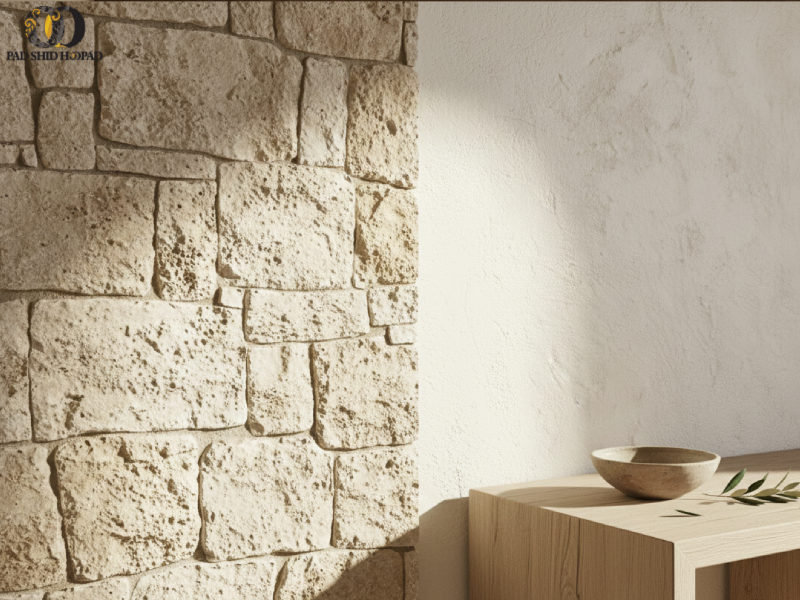
Such focus on the longevity makes the style consistent with the values of sustainable interior design. It is thought that materials will evolve gradually instead of being changed, and this concept of permanence instead of change that is frivolously fashioned is encouraged.
Color Strategy: Neutral Does Not Mean Flat
The color in the contemporary Mediterranean interiors is subtly done. The whites are warm, the beige rich and greys non-industrial.
High tones improve size and comfort in luxury villas. Lighter palettes are used in the apartments in the city to increase space. There is the addition of accents like olive green or dull terracotta which are more minimal to help add character without interrupting the balance.
This restrained palette enhances a relaxed feeling and gives the materials and light the centre stage.
Furniture Planning as a Functional Design
In contemporary Mediterranean interior design, the choice of furniture is focused more on proportion and comfort rather than on statement furniture. The seating is low profile, the silhouettes are organic and natural upholstery keep it in harmony.
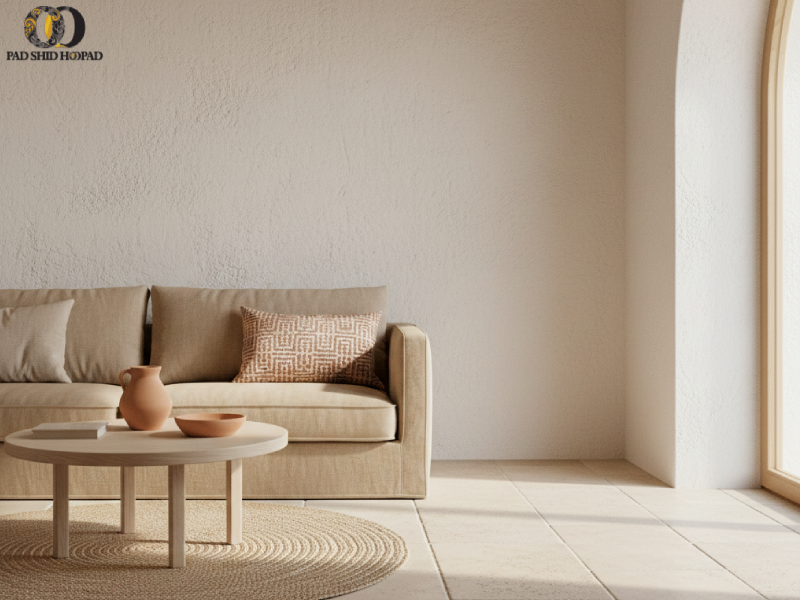
Every item is selected in order to assist in motion and functionality. This philosophy is similar to those employed in the interior office design wherein clarity and comfort have a direct impact on performance and wellbeing.
Furniture characterizes space, as opposed to occupying it.
Lighting Design: Creating Environment by Minuscule Impact
One of the most effective tools in the interior in the Mediterranean tradition is light. Open plans and scarce window dressing are used to maximise natural lighting and artificial lighting is indirect and layered.
The warm-colored light, hidden lights and gentle shadows in the background make it deep, but not dramatic.
FAQ – Does modern Mediterranean interior design fit the low-light apartments?
Yes. Upon careful lighting design and reflective facades, it is possible to feel warm and deep in the room where there is not much natural light.
Mediterranean Principles Past Residential Space
The relaxing nature of the contemporary Mediterranean interior design has made it be used outside homes. Natural materials and soft palettes help to decrease stress and enhance user experience in such a setting as a Beauty clinic interior design.
In such environments Mediterranean ideals are practicalized as instruments and not style-based- favoring emotional ease as well as visual integrity.
Mistakes that Weaken Mediterranean Interiors
The modern Mediterranean interior design is not applied to the max although it is simple. Frequent mistakes include:
Excess use of arches or rusticism.
Combining progress and conservatism with no order.
Concerns more with decoration than with spatial proportion.
The ability to restraint is crucial to successful execution. The style is an editing style rather than an accumulating style.
FAQ – Is modern Mediterranean interior design costly to apply?
Not necessarily. Although the best materials are advised, careful consideration and careful investment can lead to value in the long-run instead of high expenses.
Conclusion: Timeless Interior Design Strategic Direction.
The contemporary interior design of the Mediterranean is a suitable alternative to fads. It integrates a combination of Mediterranean interior style and modern interior design reasoning to provide spaces that are well rooted, luxurious and well inhabited.
Whether it is used in a villa or an apartment, this style buttresses a lifestyle of clarity, warmth and permanence, which are the hallmarks of a truly triumphant interior design.